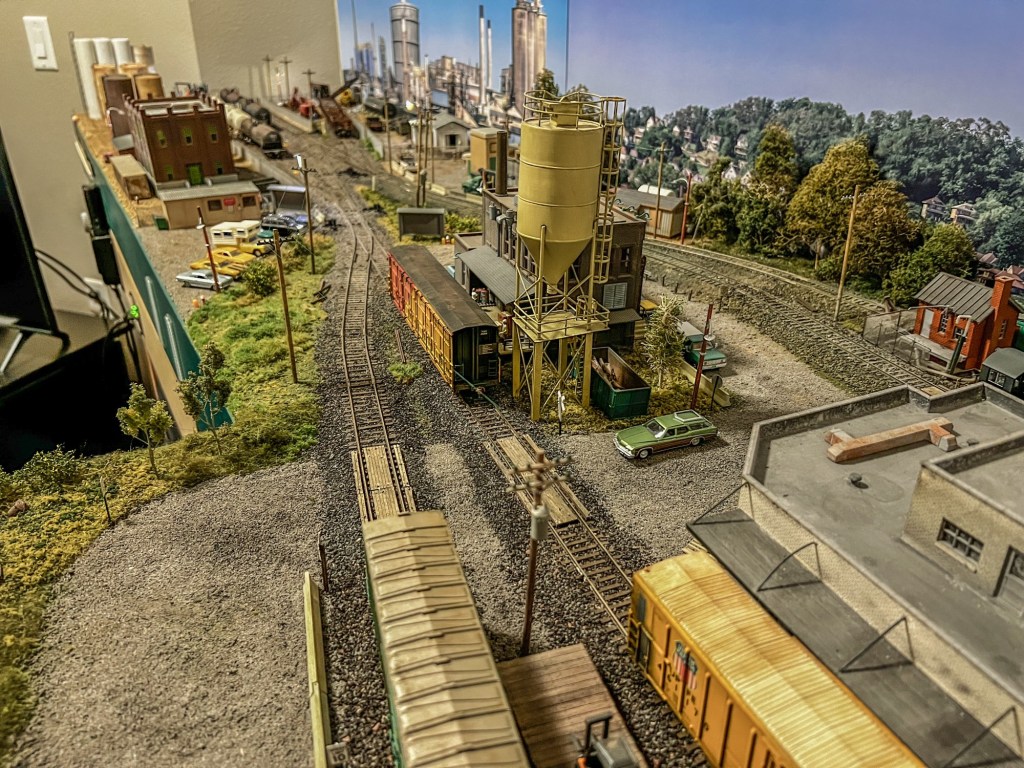
Here on this page I’ll cover operations on the layout, the Penn Central in Cincinnati. This is a two module layout, saved as part of my original NYC/PC Hitop branch layout that was published previously in Model Railroader magazine and the Penn Central Historical Society.
The layout is more or less a freelanced version of the old NYC/PC line along the Ohio River west of downtown Cincinnati, with a local supposedly working out of Riverside yard as shown in this prototype photo:
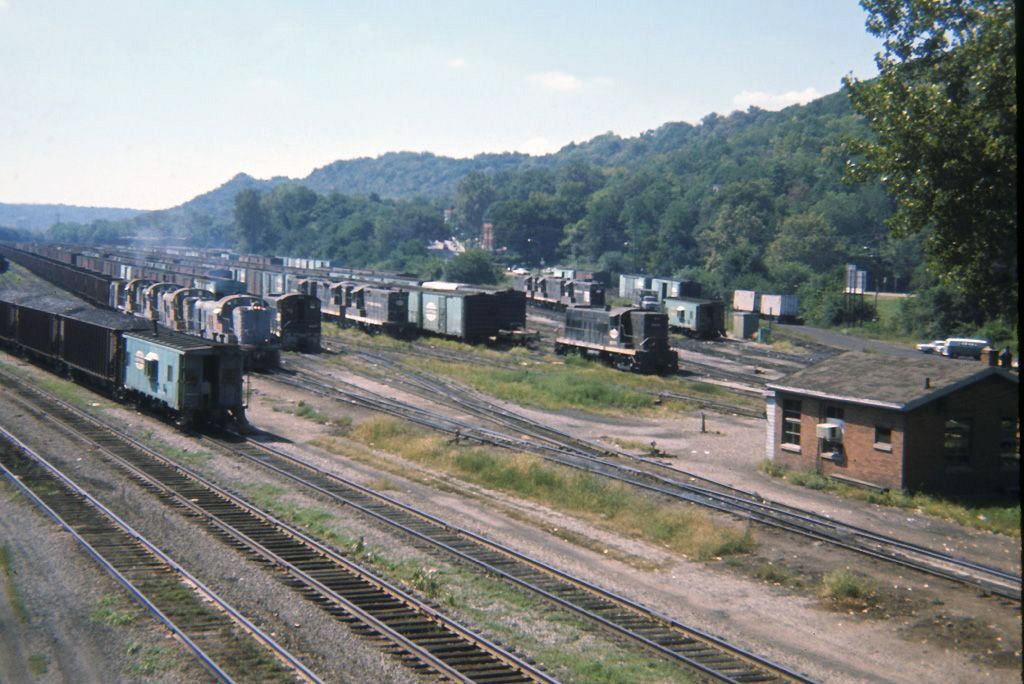
The yard of course is long gone, once in the suburb of Sedamsville. My layout is in the adjoining Cincinnati suburb of Addyston, which you’ll see a history of here as well.
My layout represents the time frame of 1968-1975. It’s taken three plus years to get the layout back up and detailed enough to “almost finished” status. Sit back, grab a cup of coffee and enjoy the journey!
The History of Addyston…..
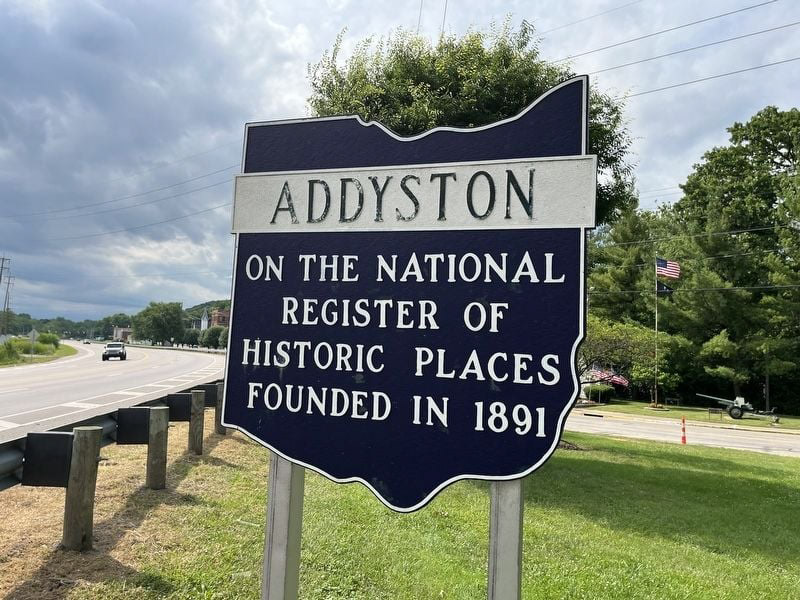
Addyston, Ohio, is a unique example of a “company town” that has survived for over 130 years. Located along the Ohio River just west of Cincinnati, its history is a blend of industrial ambition, legal milestones, and small-town resilience.
1. The Origin Story: From “Coal City” to Addyston
Before it was Addyston, the area was known as Coal City in the 1870s because of the massive coal elevators that served river traffic.
The town as we know it today was created by Matthew Addy, a Canadian immigrant and successful Cincinnati businessman. In 1889, Addy purchased riverfront land to build the Addyston Pipe and Steel Company. He didn’t just build a factory; he built a community for his workers.
A Tale of Two Towns: The village was originally two separate company settlements: Sekitan (the older western portion) and East Addyston (the residential area).Incorporation: In 1891, the two merged to become the Village of Addyston to better manage the growing population of workers coming from the South and Europe.
2. A Historic Supreme Court Case
Addyston holds a surprising place in American legal history. In 1894, the Addyston Pipe and Steel Company entered into a “cartel” with other manufacturers to fix prices. This led to the landmark 1899 U.S. Supreme Court case Addyston Pipe & Steel Co. v. United States. The court ruled against the company, strengthening the Sherman Antitrust Act and setting a massive precedent for how the U.S. government regulates monopolies.
3. The “Bricks” and Landmarks
Because it was a company town, much of the architecture is incredibly uniform.
”The Bricks”: One of the most famous landmarks is a massive three-story brick building constructed in 1872. Over the decades, it has served as a hotel, a theater, a tavern, and even a “house of ill repute.”
Village of Addyston Historic District: In 1991, much of the village was added to the National Register of Historic Places. It contains nearly 400 historic buildings, many of them “worker cottages” built before 1930.
The War Memorial: Built in 1946, the memorial at the center of town was constructed using limestone salvaged from the old Addyston Elementary School (the “Red Brick Schoolhouse”).
4. Modern Transitions
The original Pipe and Steel Company closed in 1950, which could have been the end of the town. However, the site was taken over by Monsanto in 1952. Since then, the massive industrial plant on the river has changed hands several times (Bayer, Lanxess, and now INEOS). Today, the plant remains the primary economic engine of the city.
The story of the diner on the layout….
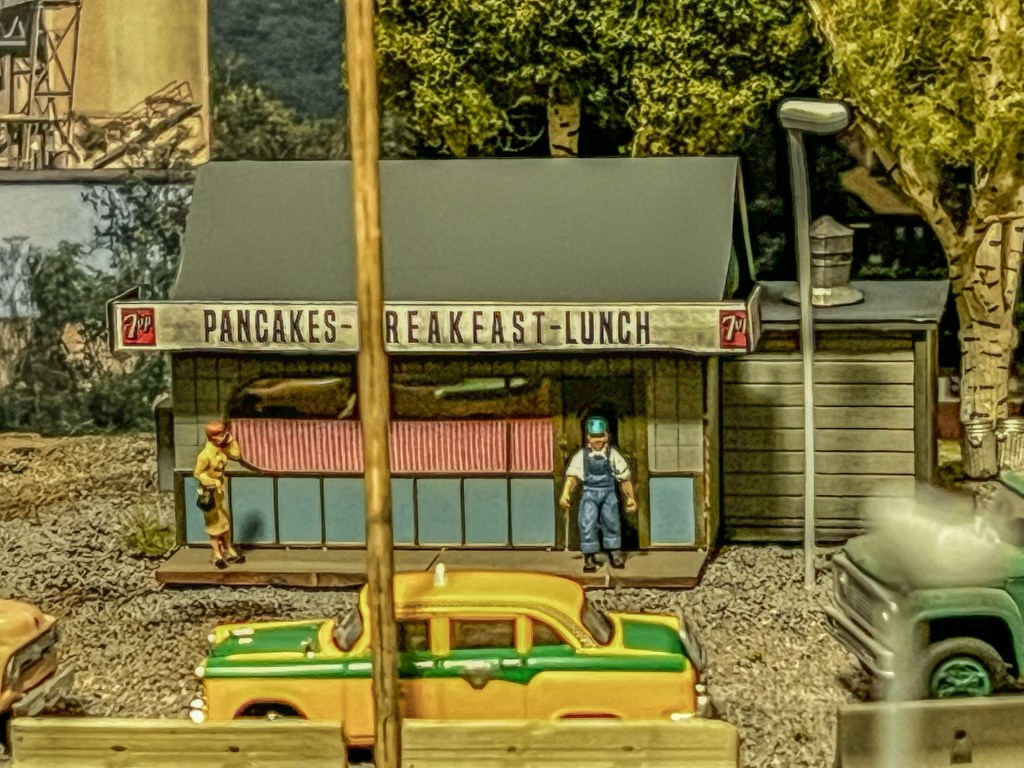
This is the start of a series I’ll post about some of the history and places in and around the community of Addyston, Ohio, west of downtown Cincinnati that I freelance model.
Local history indicates that there was indeed a small diner in Addyston, Ohio, located near the railroad tracks and the U.S. Pipe and Foundry plant.
While small local “greasy spoons” often go by several names over the decades, the most prominent candidate for a diner in that specific spot during the 1960s and 70s was a vintage Brill diner car (manufactured in the 1930s) that sat along the main thoroughfare near the tracks.
According to local historical records and roadside architecture archives, this specific diner operated under a few different names during that era:
Sherrick’s Diner: This is the name many long-time residents remember from the mid-20th century.
Peg’s Diner: It was known by this name toward the end of its life as a restaurant, eventually closing its doors as a diner around 1971.
The Diner: Often referred to simply as “The Diner” by locals and workers from the nearby industrial plants
The Setting: Addyston was a “company town” built around the massive cast iron pipe plant (U.S. Pipe). The diner was positioned to serve the hundreds of shift workers and travelers moving along River Road (U.S. Route 50).
The Railroad: The diner sat very close to the Baltimore & Ohio (B&O) railroad tracks, which have long been a defining feature of the Addyston landscape.
Post-70s Fate: After it stopped serving food in the early 70s, the building wasn’t demolished. It was painted orange and black and served as an office for V-Tech, a motorcycle repair shop. Later, it was painted white and became a consignment shop called The Treasure Chest.
In the 1960s, Addyston was a bustling hub for industrial workers. Before the modern expansion of Route 50 shifted traffic patterns, almost everyone traveling the west side of Cincinnati passed right through the heart of the village, making that small diner a prime spot for a quick “blue-plate special” or a cup of coffee.
Although the diner was a Brill car, we’re just changing it up a bit by using the FOS kit of their pancake house for the diner, and of course it’s staying in business past 1971!
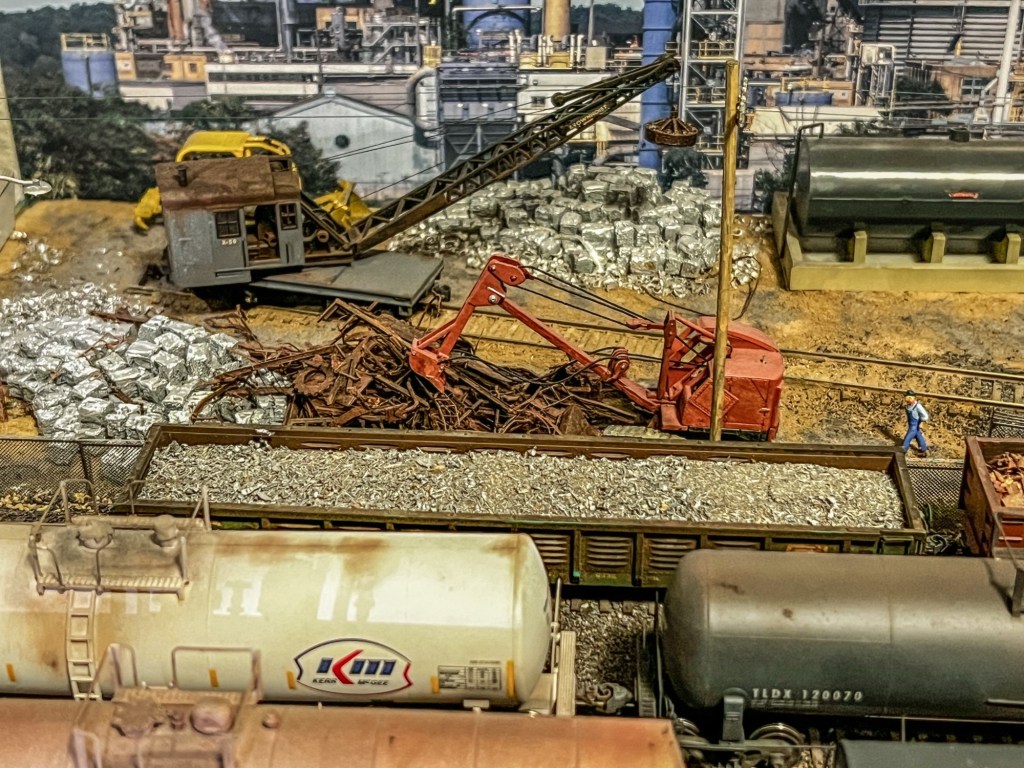
The story behind Paxton-Sullivan scrapyard…..
The following is the story behind Paxton-Sullivan scrapyard. When enlarging the original Hitop layout and doing research there must have been a Paxton scrapyard in the Nitro, West Virginia area, as almost all my industries were named for actual locations.
I decided to add the name Sullivan to the company name in memory of a good friend I knew for twenty years who I used to work with at the original Caboose Hobbies in Denver. Paul was a good friend and good man who passed away in public transportation from a massive heart attack while going to the store in December 2020. This an hour after talking to me on the phone. A good friend who I still miss today….
The company name has since been changed to Sullivan scrap and salvage….
The Legacy of the Monsanto Chemical Addyston Plant….
Just down the Ohio River from Cincinnati lies the village of Addyston, Ohio (often historically associated with the broader area near Addison). In the mid-20th century, this industrial corridor became a bustling hub for manufacturing, and the chemical facility established here would become a major chapter in the local history of the Monsanto Chemical Company.
The Spark of Production
The story begins in the mid-1900s, an era when the post-war American economy was booming and the demand for synthetic materials skyrocketed. Monsanto, looking to expand its footprint in the Midwest, utilized the strategic location of Addyston. The site offered perfect logistics: access to the Ohio River for transport, nearby rail lines, and a dedicated local workforce from the Cincinnati suburbs.
The Addyston plant specialized in the production of plastics and industrial resins. If you owned a shiny new household appliance, a plastic toy, or an automobile in the 1960s or 70s, there was a very high chance that the raw chemical building blocks—specifically ABS (acrylonitrile butadiene styrene) and SAN (styrene acrylonitrile) plastics—were manufactured right there in the Cincinnati suburbs.
Innovation and Community Integration
For decades, the plant was a cornerstone of the local economy. It provided stable, well-paying jobs to generations of families living in Hamilton County. The sight of the facility’s towers and the hum of its daily operations were simply woven into the fabric of small-town life along the river. Engineers and chemical operators at the site pushed the boundaries of polymer science, making the Addyston facility one of Monsanto’s key polymer manufacturing hubs in the United States.
Shifting Tides and a New Chapter
As the late 20th century approached, the landscape of American chemical manufacturing began to shift. Global competition intensified, and environmental awareness led to tighter regulatory standards. The community and the company had to navigate the delicate balance between vital industrial production and environmental stewardship.
In 1997, Monsanto underwent a massive corporate restructuring. The company decided to spin off its traditional chemical manufacturing operations into a completely separate entity called Solutia Inc., while the parent Monsanto name transitioned to focus almost exclusively on agricultural biotechnology.
The Addyston plant went with the spinoff. Years later, the legacy of the historic site took another turn when it was acquired by global plastics giants, continuing to operate under names like Ineos Styrolution.
A Lasting Impression
Though the corporate logo on the sign changed from the classic Monsanto block letters to new corporate banners, the history of the Addyston facility remains a profound piece of Cincinnati’s industrial heritage—a testament to the generation of workers who helped build the plastic age right from the banks of the Ohio River.
The Penn Central and railroads of Cincinnati…..
Here are two maps I originally posted on the home page of the Penn Central system and the railroads of Cincinnati circa 1952. I’m modeling the line in the lower left corner out of Riverside yard:
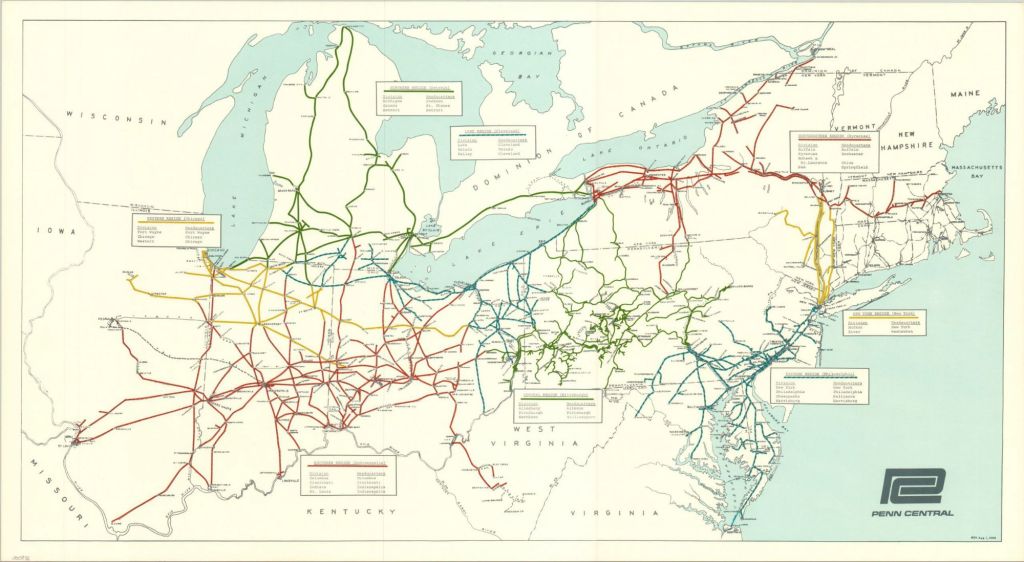
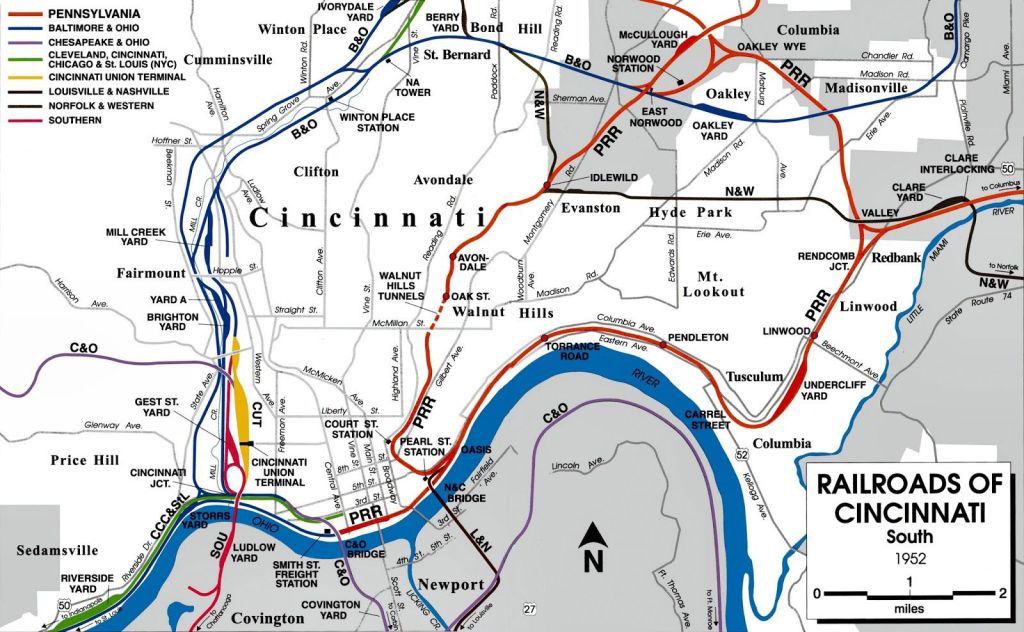
What’s ironic is when working for the Indiana and Ohio railroad I ran over or inspected ex-PC lines!
 The Weathering Depot